

Introduction
Acne-prone skin can be more likely to develop pimples, blackheads, whiteheads or clogged pores. A simple and consistent skincare routine can help keep the skin clean and comfortable without overwhelming it with too many products.
A good skincare routine for acne-prone skin should focus on gentle cleansing, suitable hydration, moisturising and daily sun protection. Using too many harsh products at once can make the skin feel irritated.
This guide covers a simple morning and night routine for acne-prone skin, useful ingredients, common mistakes and practical tips for maintaining healthy-looking skin.
What Is Acne-Prone Skin?
Acne-prone skin is skin that tends to develop breakouts or clogged pores more frequently. Oil production, dead skin cells, skincare products and other factors can contribute to clogged pores.
Acne-prone skin can also be sensitive to certain products, so introducing new skincare products gradually is a good approach.
A consistent routine does not need to contain many products. The goal is to keep the routine simple and choose products that suit your skin.
Morning Skincare Routine for Acne-Prone Skin
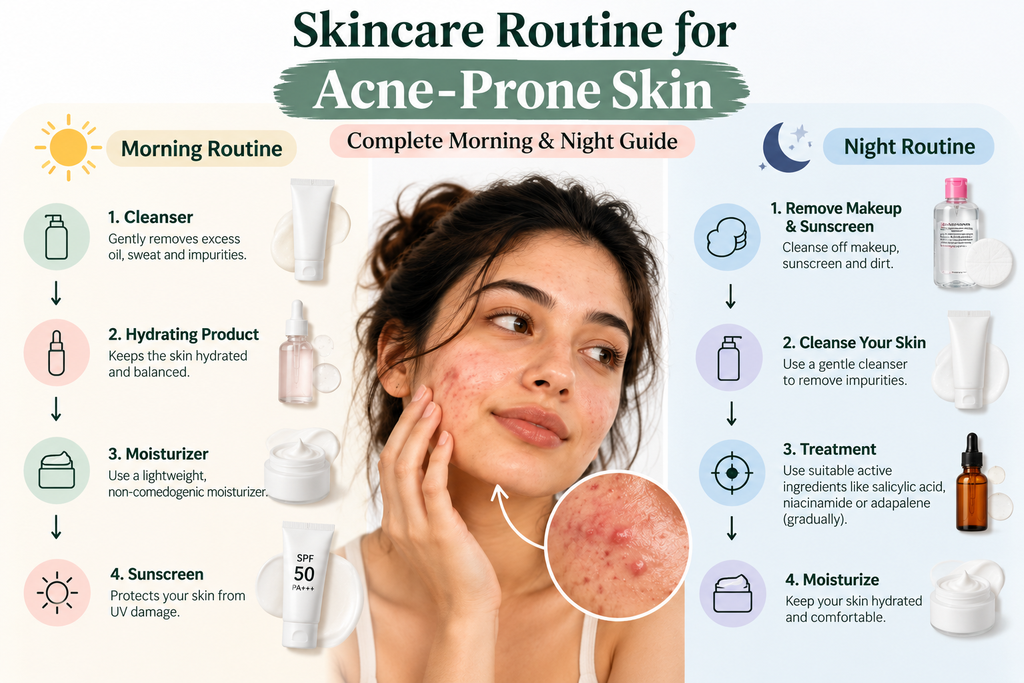
A simple morning routine can help cleanse the skin and prepare it for the day.
Step 1: Gentle Cleanser
Start with a gentle cleanser to remove excess oil, sweat and impurities. Avoid cleansing too aggressively because this can leave the skin feeling dry or irritated.
Step 2: Hydrating Product
If your skin needs extra hydration, you can use a lightweight hydrating serum or product that suits your skin.
Hydration is still important for acne-prone skin, so do not assume that every product needs to be drying.
Step 3: Moisturizer
Apply a lightweight moisturizer that feels comfortable on your skin. Look for a formula that does not feel excessively heavy or greasy.
Step 4: Sunscreen
Finish your morning routine with broad-spectrum sunscreen. Daily sun protection is important for every skin type, including acne-prone skin.
Night Skincare Routine for Acne-Prone Skin
The nighttime routine can focus on gently cleansing the skin and maintaining moisture.
Step 1: Remove Makeup and Sunscreen
If you used makeup or sunscreen during the day, remove it properly before cleansing.
Step 2: Cleanse Your Skin
Use a gentle cleanser to remove dirt, excess oil and product residue without scrubbing aggressively.
Step 3: Treatment or Active Ingredient
Depending on your routine, you may choose products containing ingredients commonly used for acne-prone skin.
Introduce active ingredients gradually rather than using several new products at the same time.
Step 4: Moisturize
Finish with a suitable moisturizer to help keep the skin comfortable. Acne-prone skin can still become dry, especially when using certain active ingredients.
Best Ingredients for Acne-Prone Skin

Salicylic Acid
Salicylic acid is commonly used in skincare products designed for oily and acne-prone skin. It can help exfoliate the skin and support clearer-looking pores.
Niacinamide
Niacinamide is a popular skincare ingredient that can support the skin barrier and is commonly included in routines for oily or acne-prone skin.
Benzoyl Peroxide
Benzoyl peroxide is an ingredient commonly used in acne-focused skincare products. If you choose a product containing it, follow the product directions and introduce it carefully.
Adapalene
Adapalene is a topical retinoid commonly used in acne care. Because active ingredients can cause irritation for some people, it is important to follow product directions and seek professional advice when appropriate.
Note: Persistent, painful or widespread acne may need professional evaluation. Skincare routines can support general skin care but are not a substitute for professional medical advice.
Common Skincare Mistakes for Acne-Prone Skin
1. Over-Cleansing
Washing the face too frequently or scrubbing aggressively can leave the skin irritated.
2. Using Too Many Active Ingredients
Using several strong active ingredients together can make it difficult to identify what is causing irritation. Introduce new products gradually.
3. Skipping Moisturizer
Acne-prone skin still needs hydration. Skipping moisturizer can leave the skin feeling uncomfortable or dry.
4. Picking or Squeezing Breakouts
Frequently touching or picking at breakouts can irritate the skin and may increase the chance of marks.
5. Forgetting Sunscreen
Daily sun protection is an important part of a skincare routine, regardless of skin type.
Tips for Managing Acne-Prone Skin
- Use a gentle cleanser.
- Avoid aggressive scrubbing.
- Choose lightweight skincare products that feel comfortable on your skin.
- Introduce new active ingredients gradually.
- Moisturize consistently.
- Use sunscreen every morning.
- Avoid frequently touching or picking at breakouts.
- Give new products time before adding several more.
- Seek professional advice for persistent or severe acne.
Simple Skincare Routine for Acne-Prone Skin
| Time | Step |
|---|---|
| Morning | Gentle Cleanser → Hydrating Product → Moisturizer → Sunscreen |
| Night | Remove Makeup/Sunscreen → Cleanser → Treatment/Active Ingredient → Moisturizer |
A skincare routine for acne-prone skin does not need to be complicated. Start with gentle cleansing, hydration, moisturizer and sunscreen, then introduce suitable active ingredients gradually.
Frequently Asked Questions
What is the best skincare routine for acne-prone skin?
A simple routine can include gentle cleansing, hydration, moisturizer and sunscreen in the morning, followed by cleansing, a suitable treatment product and moisturizer at night.
Can acne-prone skin use moisturizer?
Yes. Acne-prone skin can still need hydration. Choose a moisturizer that feels comfortable and suitable for your skin.
Is sunscreen necessary for acne-prone skin?
Yes. Daily sun protection is important for all skin types.
Is salicylic acid good for acne-prone skin?
Salicylic acid is commonly used in skincare products for oily and acne-prone skin. Introduce it gradually and follow the product instructions.
Should I use several acne treatments together?
It is better to introduce active ingredients gradually rather than adding several new treatments at once. This can make it easier to identify irritation or sensitivity.
When should I see a dermatologist?
If acne is persistent, painful, widespread or causing significant concern, consider speaking with a qualified healthcare professional.
Final Takeaway
A good skincare routine for acne-prone skin should focus on gentle cleansing, appropriate hydration, moisturising and daily sun protection.
You do not need a complicated routine with many active ingredients. Start with the basics and introduce new products gradually according to your skin’s needs.
If breakouts remain persistent or become painful or widespread, professional advice can help determine an appropriate approach.